The quality of a polished diamond depends on several factors, including the characteristics of the rough crystal, the cutting strategy, and the precision of the finishing process. For diamond manufacturers and retailers, understanding these stages is important when evaluating finished stones, planning production, and determining how individual diamonds fit into different jewelry applications.
When assessing the best lab-created diamonds, the growing process is only one part of the equation. Cutting and polishing play a significant role in determining a diamond’s brilliance, proportions, symmetry, and overall appearance.
Rough Diamond Selection and Planning
Before cutting begins, manufacturers assess the rough diamond’s size, shape, internal characteristics, and growth features. These factors help determine how the crystal can be transformed into one or more polished stones.
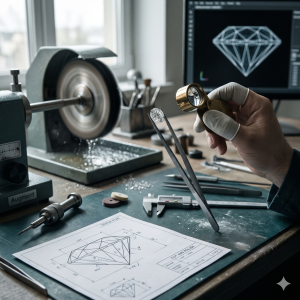
Lab-created diamonds produced through High Pressure High Temperature (HPHT) or Chemical Vapour Deposition (CVD) may exhibit different growth characteristics. Identifying inclusions, growth irregularities, and areas of suitable material helps manufacturers develop an appropriate cutting plan.
Planning also involves balancing polished yield against the desired quality and dimensions of the finished diamond. Maximizing weight retention is important, but preserving material at the expense of suitable proportions or visible quality may not produce the best commercial outcome.
Cutting Precision and Proportions
Diamond cutting determines the arrangement, size, and angles of a stone’s facets. These characteristics influence how light enters the diamond, reflects internally, and returns to the observer.
For brilliant cuts, including round diamonds, precise relationships between the crown, pavilion, table, and girdle help determine light performance. Poorly controlled proportions may affect brightness, fire, and the overall visual balance of the stone.
Manufacturers must also account for the intended shape. Oval, pear, emerald, and other fancy cuts require different planning approaches, with attention to symmetry, outline, and the distribution of weight across the finished stone.
The Role of Polishing and Symmetry
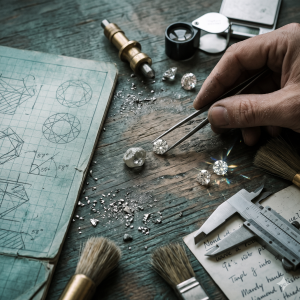
After the diamond has been shaped, polishing refines its facets and produces the smooth surfaces required for effective light reflection. Uneven facet surfaces or inconsistent angles can affect the diamond’s appearance, even when its general proportions are acceptable.
Symmetry refers to the alignment, arrangement, and consistency of a diamond’s facets. Precise symmetry supports a balanced appearance, particularly in cuts where facet alignment is essential to the overall pattern.
For manufacturers, consistent cutting and polishing standards can help reduce variation across production batches. This is particularly relevant when producing matching stones for earrings, bracelets, or multi-stone jewelry designs.
What This Means for Retailers
Retailers should look beyond carat weight and color when evaluating polished diamonds. Cut quality, symmetry, polish, grading reports, and the stone’s appearance under suitable lighting all contribute to product assessment.
Understanding how cutting and polishing influence the finished diamond also helps retailers communicate quality differences more accurately to customers and compare stones with similar grading characteristics.
Final Thoughts
The best lab-created diamonds are shaped by more than their initial crystal quality. Rough selection, cutting precision, polishing, symmetry, and yield planning all contribute to the final result. For manufacturers, controlling these stages can support production consistency and improve the utilization of rough material. For retailers, understanding the process provides a stronger basis for evaluating finished diamonds and selecting stones suited to their product ranges.